This is number four in a series of checklists that I am putting together for a new book I am writing. Previously, I blogged about my SQL Server Hardware Checklist, my SQL Server Operating System Checklist, and my SQL Server Instance Checklist. The goal of the SQL Server Database Configuration Checklist is to help DBAs document their databases, which in turn could reveal some potential changes that could be made in order to optimize their performance and availability.
My Ideal SQL Server Test Box is on the Way
 Several weeks ago I wrote a blog post called “What is the Ideal SQL Server Test Box?” At that time I was putting together the specs for a test SQL Server box I hoped to be able to get for my home office. While a laptop is great for giving SQL Server presentations, it’s not the greatest for testing and stressing SQL Server. And while I do have access to some large SQL Server boxes via remote access, I am limited to what I can do on them. So what I really wanted was my own test box that I could reconfigure as needed for testing and benchmarking.
Does Your Company Have a SQL Server DR Plan?
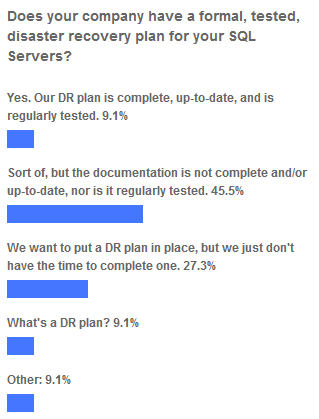
This past month I ran a poll asking this question: “Does your company have a formal, tested, disaster recovery plan for your SQL Servers.” While this was not a scientific poll, nor do I purport that it is representative of the real world, the results are still scary.
As you can see, only about 9% of responders said they have in place a complete, up-to-date, and tested DR plan. And another 9% said that they didn’t even know what a DR plan was.
About 45% said they “sort of” have a DR plan, but it is not complete and/or up-to-date, nor is it regularly tested. And then about 27% said that they wanted to put a DR plan in place, but that they just didn’t have time to complete one. The 9% who answered “other” were consultants, and the question didn’t really apply to them.
It’s disconcerting to think that only about 9% of companies have a valid DR plan, 45% have a “sort-of” plan, and another 36% have no plan at all.
SQL Server Instance Checklist
This is my third in a series of checklists that I am putting together for a new book designed for DBAs to help audit their SQL Server instances. Previously I blogged about my SQL Server Hardware Checklist and my SQL Server Operating System Checklist. The goal of this checklist is to help DBAs document how their SQL Server instances are configured, which in turn may reveal some potential changes that could be made in order to better optimize their performance and availability.
Vote for the Exceptional DBA of the Year
Starting today, you can vote for the 2010 Exceptional DBA of the Year. All of the nominations have been reviewed by a panel of judges, and six have been selected to be voted on by the SQL Server community. The winner will not only receive the recognition of being the 2010 Exceptional DBA of the Year, but will receive a full conference pass for the 2010 PASS Community Summit, most hotel and travel expenses, and a license of SQL Toolbelt.
SQL Server Operating System Checklist
As a part of a new book project, I am putting together a series of checklists that DBAs can use to inventory and audit their servers. Previously, I blogged about my SQL Server Hardware Checklist, in this post, I am writing about my Operating System Checklist. The goal of the checklist is to help DBAs document how the operating system is configured, which in turn could reveal some potential changes that should be made to the operating system in order to better optimize it for SQL Server.
 Brad M McGehee